Catalog
Blog
VSF Submariner — Lume, 904L Steel and Version Differences
VS Factory earned its reputation on two components, and neither of them is the bezel.
Ask a forum which Submariner to buy and half the answers say VSF. Ask why, and you get two words: crystal and movement. This guide takes the four questions people actually type into Google about the VSF Submariner and answers them one at a time. How long the lume glows. Whether the steel is really 904L. What changed between V2 and V3. And where Clean Factory still wins.
Every Submariner in our Submariner collection shares the same core build sheet: a 904L steel case, a sapphire crystal with anti-reflective coating, and a ceramic bezel insert with platinum-filled numerals. What separates one build from another is execution, and execution is where factory names come from. VSF is the shorthand the community uses for VS Factory, and it is attached to Submariner builds more often than any other name.
One thing up front, because it matters more than anything else in this article. We do not publish a factory name against a listing. Batches change, and a claim that was true in March is a lie in September. If you want to know what is in the current batch of a specific watch, ask us in the chat and the team checks it. Everything below is about what the VSF name means as a build standard, which is a different question.
What VSF means on a Submariner
VS Factory is a Chinese manufacturer that specialises in a narrow set of Rolex sports references. It does not try to cover the whole catalogue. The Submariner is its flagship, the Sea-Dweller follows from the same tooling, and the Yacht-Master with the rubber strap is the third pillar. That narrowness is the point. A factory that makes four references puts all of its machining time and all of its revision cycles into four references.
In practice, a VSF Submariner sits in the flagship tier: 904L steel, CNC work held to about two hundredths of a millimetre, and a movement built to follow the architecture of Rolex’s own 3235 rather than a generic automatic with a Rolex-style dial bolted on. Our factory comparison guide maps which manufacturer leads on which reference across the whole Rolex line, and VSF sits at the top of the Submariner column there for reasons this article breaks down component by component.
What VSF is not: a full-catalogue supplier. There is no VSF Daytona worth discussing and no VSF Datejust. If you see either offered under that name, the name is decoration.
VSF lume: how long the glow actually lasts
This is the single most searched question about the factory, and it deserves a number rather than an adjective. Our own head-to-head measurements, written up in the VSF and Clean Submariner comparison, put a fully charged VSF dial at roughly six to seven hours of visible glow in a genuinely dark room. Clean sits a little behind at five to six. Rolex’s own Submariner holds eight hours and more.
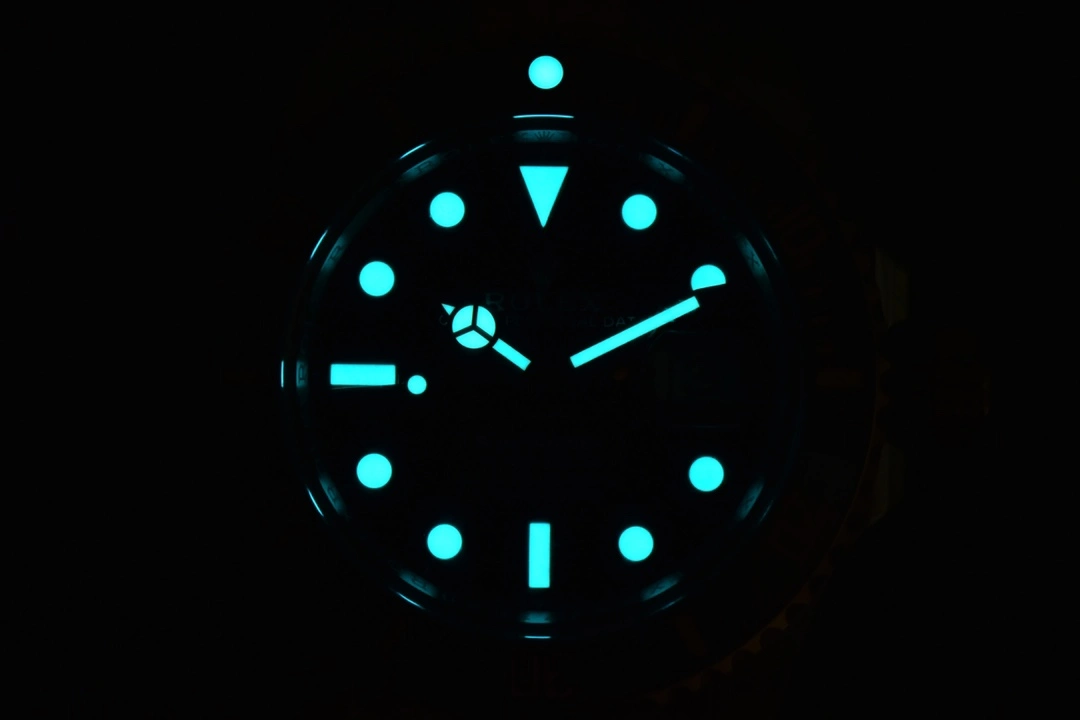
Three details matter more than the headline number:
Charge speed. VSF lume takes a charge fast. Thirty seconds under a desk lamp is enough to bring the markers up to full brightness. Weaker formulations need a minute or more under direct light and still come up dim.
Colour drift. A good blue-green lume starts cool blue and drifts towards green as it fades. VSF follows that curve. What no replica lume reproduces yet is the warm white flash Rolex’s compound shows in the first half hour after a strong charge. If someone tells you a factory has solved that, they are selling.
Plot filling. Duration is only half of the impression. The other half is whether each marker is filled level with its surround, with no dish in the centre and no overspill at the edge. Look at the pip in the bezel and the marker at six on your QC photos. Those two positions are where uneven filling shows first.
Short answer: six to seven hours of useful glow from a full charge, fast to charge, cool blue fading to green. Bright enough that you read the time at 3am without a phone.
Does VSF use 904L steel?
Yes. Flagship-tier VSF Submariner builds use 904L, the same alloy family Rolex uses on its own cases and bracelets. So does every watch we list, across all sixteen collections, regardless of which movement option you pick. The alloy does not change between the Japanese and the Swiss version of the same watch. Only the movement does.
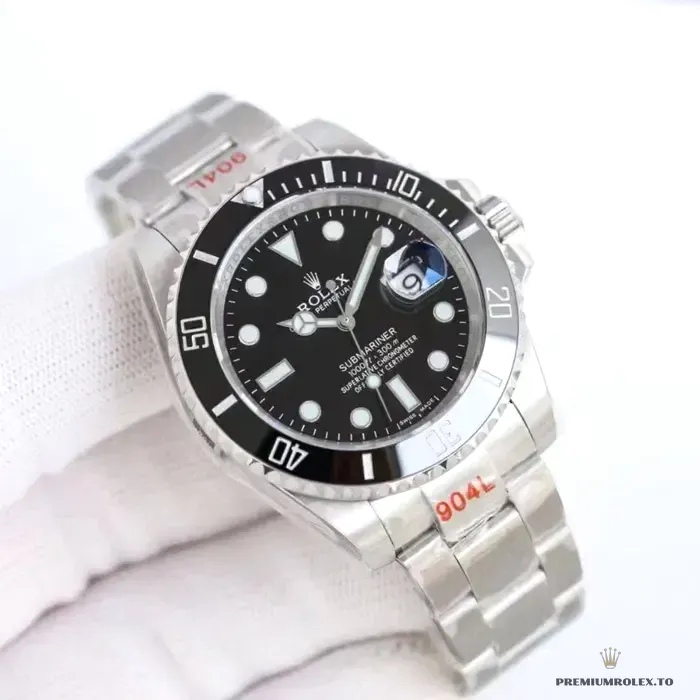
What 904L buys you day to day is narrower than the forums suggest. It is harder, so it holds a polish longer and picks up hairlines more slowly on the clasp and the outer links, which are the two surfaces that take the most abuse. It resists salt better. It is not measurably heavier. A finished Submariner with a full bracelet lands around 155 grams either way, which is the figure our buying guide uses and the figure you should expect when you first pick one up.
Where the alloy really shows is in the comparison against lower tiers, and we walk through the metallurgy in the 904L steel guide. Inside the flagship tier, every serious Submariner builder is already on 904L, so it is a floor rather than a differentiator. If a listing does not say 904L, that silence is the information.
The crystal, and why people keep bringing it up
The component that built the VSF name is the sapphire. The factory’s crystal is ground and coated so cleanly that the dial reads as if it were sitting in open air with nothing over it. Collectors call the effect the black hole. Look straight down at a black dial and there is no visible glass plane between your eye and the print.
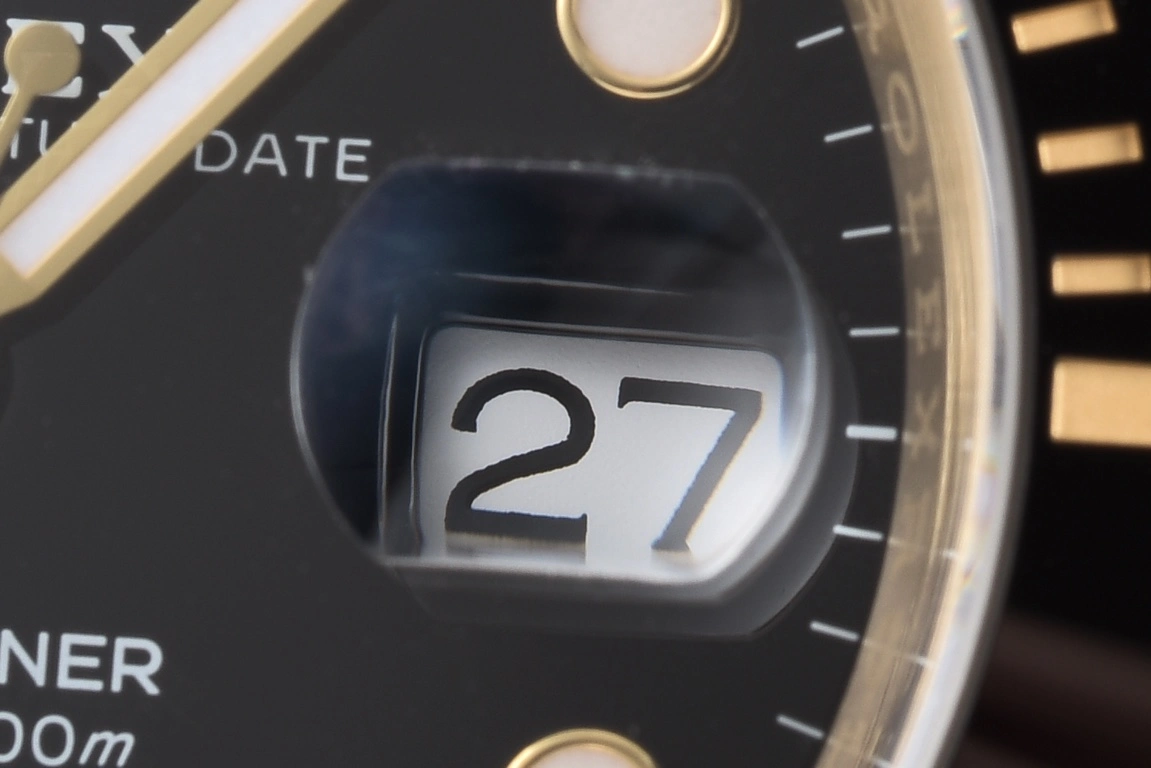
Two measurable things create that impression. The anti-reflective coating throws the correct blue-purple flash when you tilt the watch off axis, rather than the flat grey or faint green that weaker coatings give. And the cyclops sits at about two and a half times magnification with very little distortion at the edge of the lens, so the date stays square instead of bowing.
The comparison point everyone reaches for is the milky ring, a faint white haze that appears on some competing crystals at the seam where sapphire meets case. It is subtle, it is invisible in normal wear, and it shows up when you deliberately tilt the watch under a desk lamp looking for it. VSF crystals do not have it. That is a narrow win, and it is a real one.
VS3235: free sprung balance and a 70-hour runtime
The second pillar is the movement. The VS3235 is built to follow the layout of Rolex’s 3235 rather than approximate it, and two features carry most of the weight.
The first is the runtime. Wind it fully on Friday evening, leave it in the box, and it is still running on Monday morning. The Swiss option we sell in the 3235 family is specified at about 70 hours of power reserve, and that single number changes how you live with a watch collection. Nothing needs a winder. Nothing needs resetting on Monday.
The second is the balance. A free sprung oscillator has no regulator lever. Rate is adjusted by moving small weights on the balance rim, which is how Rolex regulates its own calibres. The practical consequence is that a watchmaker who knows the platform can bring the rate inside a couple of seconds a day and it stays there, because there is no lever to drift. Out of the box, expect roughly five to eight seconds a day from the Swiss option and fifteen to twenty from the Japanese one, both measured over a normal week of wear rather than on a bench.
The frequency is 28,800 vph on the Swiss version, which is where the smooth sweep comes from, and 21,600 vph on the Japanese version, where the sweep is slightly steppier if you stare at it. Our movement guide compares the whole 3235 family side by side, including the newer Jinghe option, and is the better read if the calibre is what you actually care about.
V2 and V3: what changes between versions
Factories iterate. A version number is a batch revision, not a marketing tier, and the changes between revisions are usually three or four small corrections rather than a redesign. On the Submariner line the recurring targets have been:
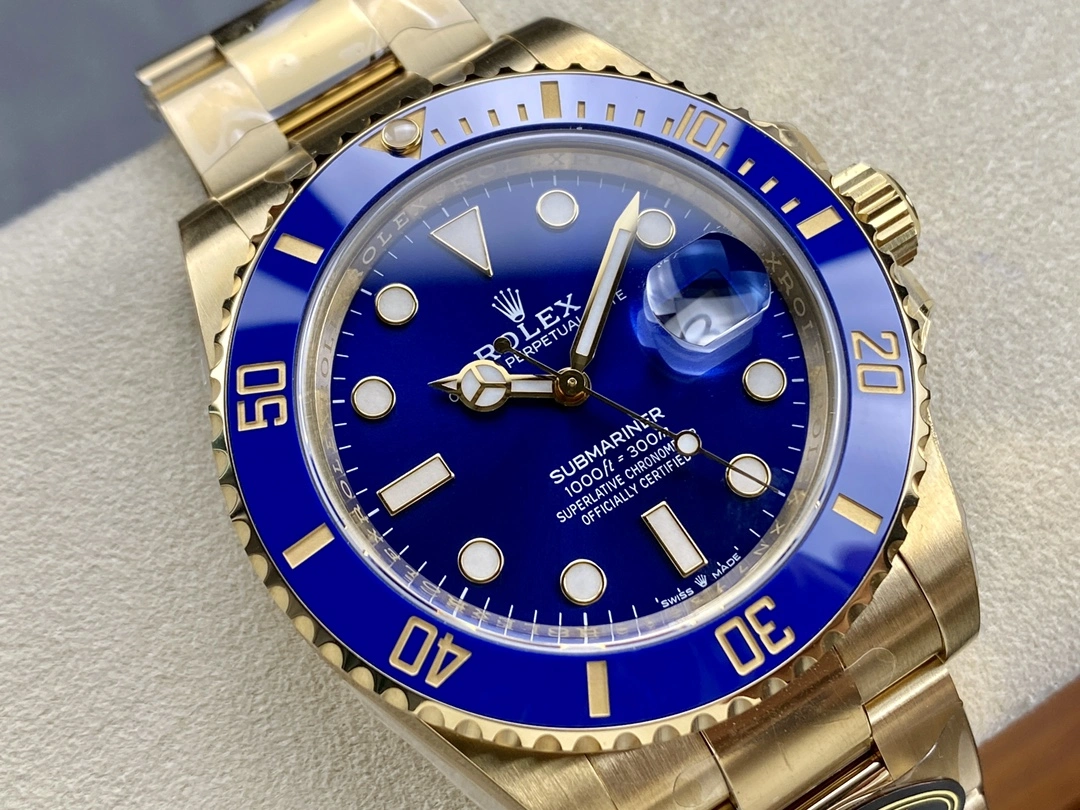
The honest summary of the version question is that the curve has flattened. The jump from a first revision to a second was large. The jump from a third to a fourth is a bezel shade and a font stroke. If you are waiting for the version that fixes everything, you will keep waiting while perfectly good watches ship. What matters more than the version number is whether you look at photos of your own watch before it leaves, which is a step we build into every order rather than an upgrade.
Where Clean still wins
A guide that only lists strengths is an advert. VSF loses rounds, and it loses them in the places people look at most.
The bezel. Clean’s ceramic is blacker and its numerals have sharper edges with more consistent fill depth from the ten marker round to the fifty. VSF’s insert can read faintly grey next to it in daylight, and the twenty and forty markers are the softest positions.
The bracelet. On the original, the outer links are brushed along their length while the centre links are polished, and rotating your wrist produces a shifting play of light. Clean reproduces that directional brushing more precisely. VSF’s finishing is correct but the contrast between the two surfaces is muted, so the light play is quieter.
Crown feel. Winding a VSF is light and smooth. Some owners prefer the firmer resistance the competing platform gives, which is closer to the feedback you get from the original. This one is preference, not quality, but it is the interaction you have with the watch every few days.
Put crudely: VSF wins what you measure, Clean wins what you see across a table. The ten-point head-to-head scores every category in detail if you want the full card rather than the summary.
VSF against gen: what a trained eye still catches
At arm’s length, across a desk, on a wrist under a cuff, nobody separates a flagship Submariner build from Rolex’s own. That is not a boast, it is a statement about how people look at watches. The interesting question is what survives a loupe, because that is what a watchmaker uses.
The tells that hold up longest are lume duration past the eight-hour mark, the exact terminal curve of the hairspring inside the movement, and the microscopic edge quality of the printing where a line changes direction. None of those are visible without magnification or an opened case. We say it plainly on every listing and in the chat: these are replicas built to follow the original’s design, not Rolex products, and we never suggest otherwise. If you want the full list of tells, our what a jeweller notices piece goes through them without the marketing.
The Submariner references where build quality matters most
Not every Submariner is equally hard to make. Three groups behave differently.
Black dial, black bezel
The easiest to get right and the hardest to get wrong, because there is no colour to miss. The 41mm current-generation black is the default recommendation, and the 40mm 116610LN remains the pick if you want the older maxi case with the thicker crown guards.
Green bezel and green dial
Green is where builds separate. The sunburst green dial on the 116610LV Hulk shifts under light in a way that is difficult to reproduce, and inserts often land a shade too saturated in direct sun. The black-dial, green-bezel 126610LV is the easier of the two greens to live with because only the insert has to be right.
No date
Removing the date window and the cyclops removes the two components people scrutinise first. The 124060 is the purist choice for exactly that reason, and it is the hardest Submariner to fault at conversation distance.
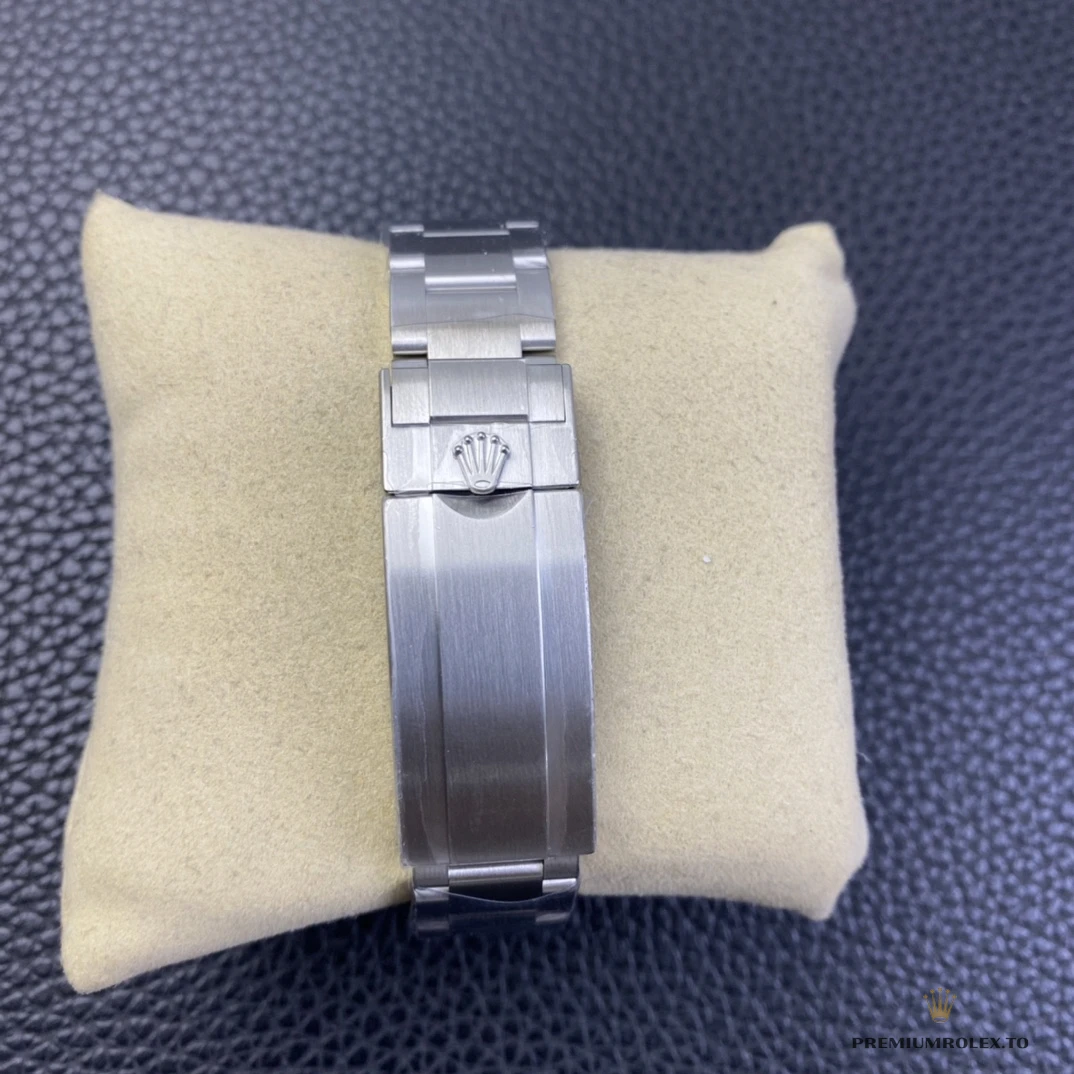
Across all three, the bracelet is the same story. The Glidelock clasp gives you about 20mm of adjustment in two-millimetre steps without a single tool, which is the feature you will actually use in summer when your wrist swells.
Wearing one: water, magnets, service
The spec table on each listing gives 30m, and that is the number to plan around whatever the original reference was capable of. Rain, a sink, hands under a tap: fine. The pool, the shower and the sea: leave it on the side. Keep the crown screwed down as a habit rather than a rule you remember after the fact. We cover the reasoning in the water and everyday wear guide.
Beyond that, the care list is short. Wipe the case and bracelet with a soft cloth when it comes off. Keep it away from laptop speakers, magnetic clasps and induction hobs. Have it serviced every three to four years by any watchmaker comfortable with the platform, which is most of them. If it sits for a few days, give the crown about twenty turns before you set it rather than shaking it awake.
Questions we get asked about VSF
Is the VSF Submariner better than Clean?
On internals, yes: longer runtime, free sprung balance, better crystal, brighter lume, deeper rehaut. On externals, no: the bezel and the bracelet finishing go the other way. Pick by what you look at. If you rotate watches and open casebacks, VSF. If the watch lives on your wrist and gets seen, the other build has a real case.
Which factory made the Submariner I am about to order?
It depends on the batch, and we will not guess in public. Ask in the chat with the listing you are looking at and the team checks the current batch for you. That answer is less satisfying than a name on a product page, and it is the only honest one.
Is VSF a superclone?
The word gets used loosely. In the narrow sense the community means, a superclone is a flagship-tier build with 904L steel and a movement that follows the original architecture rather than a generic automatic. A VSF Submariner with the Swiss option fits that description. A 904L case with a Japanese automatic inside is a very good watch, but it is a different specification and worth a different word.
Can a normal watchmaker service the VS3235?
Yes. The layout follows the 3235, so the strip-down sequence is familiar and many Rolex 3235 parts fit. The one thing worth asking before you hand it over is whether the watchmaker has worked on the platform, because a few internal tolerances differ and a regulator who expects a lever will be looking for something that is not there.
Does the Japanese movement option change the case or crystal?
No. Same 904L case, same sapphire with anti-reflective coating, same bezel insert. The movement is the only difference: about 40 hours of power reserve and 21,600 vph instead of roughly 70 hours and 28,800 vph. Any local watchmaker can service the Japanese option, which is a real advantage if you are nowhere near a specialist.
40mm or 41mm?
The millimetre is barely visible; the case profile is what you notice. The older 40mm wears a little chunkier through the crown guards, the current 41mm is slimmer through the lugs. Under a 17cm wrist the 40mm is the safer buy. Over 18cm, take the 41mm. Our size guide has the measured numbers rather than the guesswork.
Where to start
If you want the shortest route: pick the reference first from the 33 Submariner listings, decide between the Japanese and Swiss movement options on the product page, then ask us in the chat what the current batch looks like for that specific watch before you check out. You get photos and a video of the exact unit within three to five business days of paying, and nothing ships until you say it looks right. If the bezel shade or the date font bothers you in those photos, that is the moment to say so.
Still torn between a Submariner and something with a working chronograph? The Submariner and Daytona comparison is the next thing to read.
 WhatsApp Support