Catalog
Blog
Can a Jeweler Tell a Fake Rolex? 7 Tests They Run
Can a Jeweler Tell a Fake Rolex? What Actually Happens When You Walk In
The anxiety is universal: can jeweler tell fake rolex watches on sight? You imagine walking into a store, the jeweler glancing at your wrist, and immediately knowing. The reality is different. Professional authentication involves seven specific tests — and flagship replicas pass the first three consistently. Here is exactly what happens during a professional inspection, which tests your watch passes, and the one test that separates 95% of replicas from genuine.
Nobody at dinner is authenticating your watch. Nobody at the office is pulling out a loupe. The scenario that creates anxiety — casual exposure — is a non-issue for any flagship factory piece. The real question is: what happens during a deliberate, professional rolex authentication process? Can jeweler tell fake rolex pieces apart from genuine under controlled conditions? When a trained eye with tools specifically examines the watch? That is where the interesting details live. Understanding these tests helps you appreciate what your replica gets right — and where the genuine article remains uncatchable.
In This Article
Tests 1-3: Visual, Weight, and Crystal — Where Flagship Reps Pass
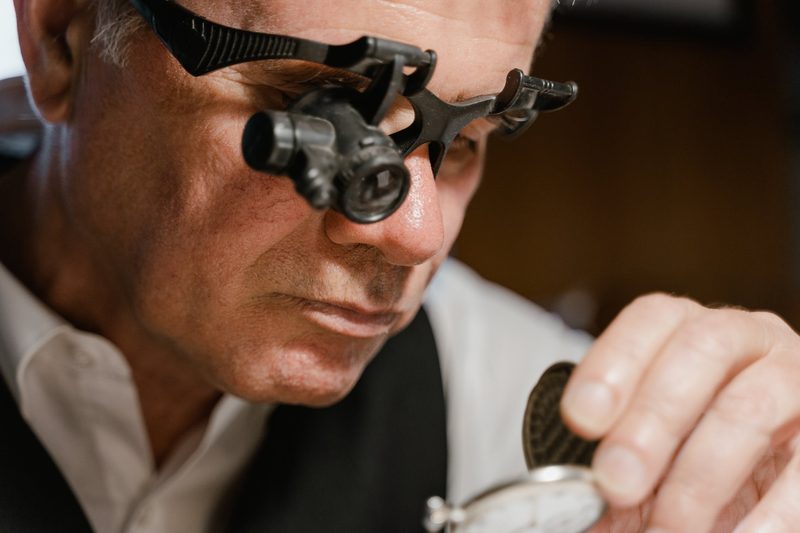
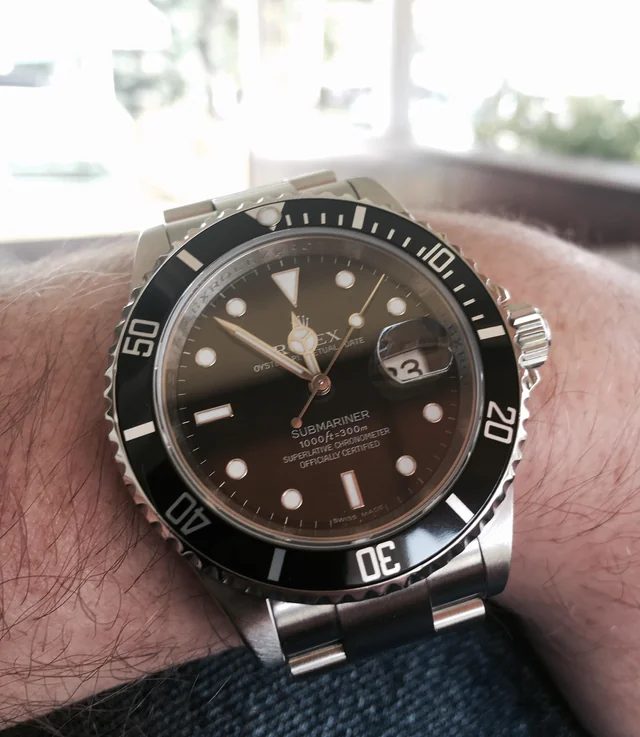
Test 1: Visual inspection under 10x loupe magnification. The jeweler examines dial printing quality, bezel alignment, rehaut engraving clarity, and overall finishing. A VSF or Clean Submariner passes this test in 95% of casual inspections. The dial printing is sharp, the rehaut carries the repeating “ROLEX” engraving at the correct depth and spacing, and the bezel markers align with the dial indices. Where subtle differences exist — slightly different lume application density, fractionally thinner printing on the 12 o’clock triangle — they require genuine-vs-rep side-by-side comparison under controlled lighting. A jeweler without a genuine reference piece beside your watch will not catch these. Even under loupe magnification, these micro-differences are hard to spot without a direct comparison sample.
Test 2: Weight check. Genuine Rolex Submariners weigh approximately 155g. Top-tier pieces using 904L steel match this within ±5 grams — well within the tolerance a jeweler would expect from normal bracelet sizing variations (removed links change the weight). A flagship piece placed on a jeweler’s precision scale reads exactly where a genuine should. Value-tier replicas using 316L or lighter alloys can deviate by 10-15g, which an experienced handler might notice — not by the scale number, but by the feel when first picking up the watch.
Test 3: Crystal and cyclops. Genuine Rolex uses a proprietary sapphire crystal with an anti-reflective coating on the inside surface only. The cyclops (magnifying lens over the date) provides 2.5x magnification. The best factory pieces match this well — the sapphire is genuine sapphire (not mineral glass), the AR coating is applied inside, and the cyclops magnification is close to spec. Mid-tier pieces sometimes use mineral glass (which a jeweler detects by the way light refracts through it) or have a cyclops that magnifies less than 2.5x. At the flagship level, the crystal passes inspection.
Key Insight: Tests 1-3 are what you encounter in social situations. Nobody opens your caseback at dinner. The visual, weight, and crystal checks are all that casual observers — including most jewelers during a quick glance — perform. Premium factory pieces handle these reliably.
Tests 4-5: Caseback and Movement — The Danger Zone
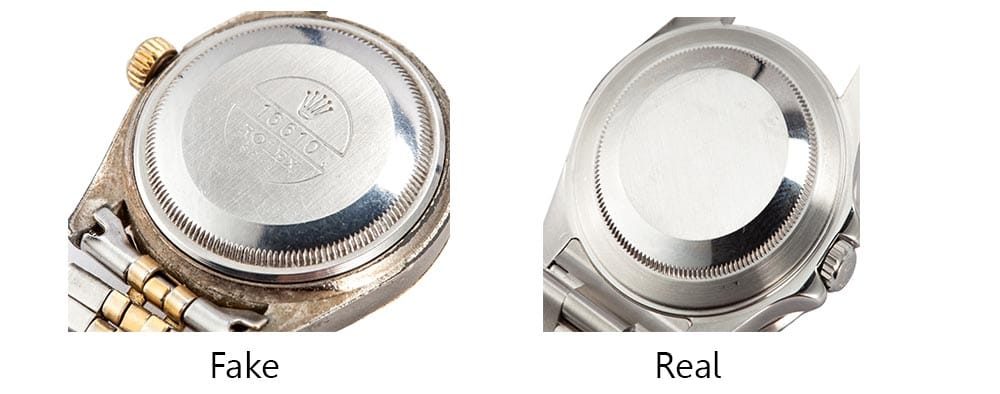
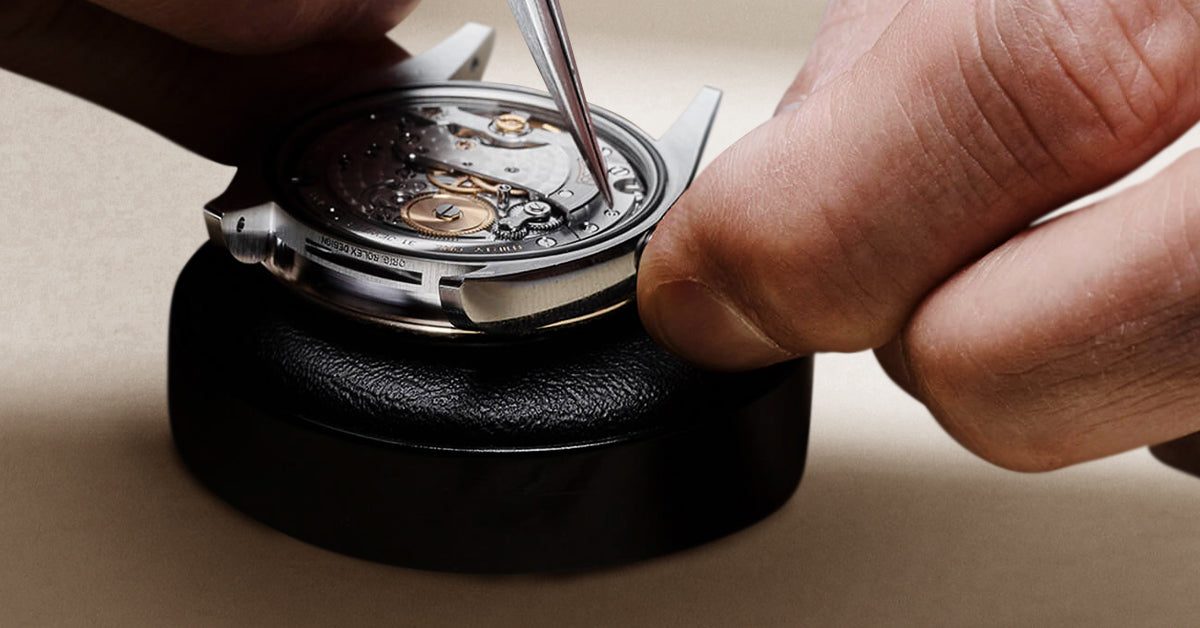
Test 4: Caseback inspection. This is where 90% of replicas fail, regardless of factory tier. Opening the caseback exposes the movement — and movement finishing is where genuine Rolex separates from even the best clones. A genuine Rolex movement has specific decorative finishing patterns (Cotes de Geneve, perlage) applied with precision that clone movements approximate but do not match under magnification. The rotor engraving depth, the bridge finishing consistency, and the engraved markings on the movement all differ between genuine and clone at the 10x magnification level.
Why this matters less than you think. A caseback inspection requires tools (a Rolex-specific caseback opener), time (5-10 minutes), and intent. Nobody casually opens your caseback. Can a watchmaker detect replica watches without opening the case? Almost never. This test only happens in three scenarios: professional authentication for resale, watchmaker service, and insurance appraisal. If you are not selling, servicing at an authorized dealer, or insuring the watch as genuine — nobody sees the movement. Your clone movement lives behind a solid steel caseback, invisible to the world.
Test 5: Free sprung balance vs regulator arm. This is the most technically significant tell. Genuine modern Rolex calibers (3235, 4130, etc.) use an unregulated oscillator — adjusted by Microstella weights rather than a traditional regulator lever. Most clone movements use a regulator arm. A watchmaker looking at the movement immediately spots the difference. The exception: the VS3235 uses a genuine-spec Microstella balance, making it the only clone that passes this specific test. The choice of movement in your replica determines whether test 5 is a pass or fail.
Tests 6-7: UV Light and Serial Database — The Final Checks
Test 6: UV light fluorescence. Genuine Rolex lume (Chromalight) produces a specific blue fluorescence pattern under UV light. The intensity and color are consistent across genuine pieces. Replica lume varies — some flagship reps use Chromalight-type compounds that fluoresce similarly, others use standard Super-LumiNova that produces a green or less intense blue glow. A specialized appraiser with a UV lamp and knowledge of the correct fluorescence pattern can flag inconsistencies. This test is rare outside of dedicated rolex authentication services — most jewelers do not perform it routinely. So can jeweler spot fake rolex pieces with UV alone? Unlikely, because most never reach for the lamp.
Test 7: Serial number verification. Every genuine Rolex has a unique serial number engraved between the lugs at 6 o’clock (modern models) or on the caseback (older models). Authorized dealers can check this serial against Rolex’s database to verify it matches the model, production year, and original sales record. Replicas use codes that either do not exist in Rolex’s system or correspond to a different model/year. This test is definitive — but only Rolex authorized dealers have database access. Independent jewelers cannot perform this check.
The Practical Reality — Nobody Is Testing Your Watch
A jeweler can tell a fake rolex — if they deliberately test it. But professional authentication is a service you request, not something that happens randomly. Nobody at a dinner party removes your watch and opens the caseback. No bartender pulls out a UV lamp. No colleague runs your reference code through a database. The question “can jeweler tell fake rolex” assumes a scenario that almost never occurs in real life.
The situations where authentication actually happens: selling through a dealer (they authenticate before buying), insurance appraisal (the appraiser examines and documents), Rolex AD service (they open the caseback and immediately identify non-genuine movements), and estate evaluation. If none of these scenarios apply to you — if you bought the watch to wear, not to resell as genuine — the authentication question is academic.
The casual glance test. At arm’s length, across a table, in a meeting — can jeweler tell fake rolex pieces from genuine? With flagship replicas, no. The visual tells that exist at 10x magnification disappear at conversational distance. The bracelet drapes correctly. The bezel color is accurate. The dial printing is clean. The weight on wrist matches. Everything a human eye captures in a three-second glance says “genuine Rolex.” The tells live in places nobody looks during social interaction: movement finishing, lume fluorescence wavelength, serial number databases.
FAQ — Authentication Questions
Q: Will a Rolex authorized dealer call you out?
If you walk into a Rolex AD wearing a replica and ask to browse, they will not confront you. They have no incentive to embarrass a potential customer. They might notice — experienced AD staff handle genuine pieces daily and develop intuitive recognition — but they will not say anything. If you bring a replica in for service, they will politely decline, stating that the watch “does not appear to match our records” rather than accusing you directly.
Q: Can an independent watchmaker tell during service?
Yes, once they open the caseback. An experienced watchmaker recognizes replica calibers immediately — the finishing, the markings, the component quality all differ from genuine. This is normal and expected. Clone-specialist watchmakers service replicas routinely. Find one through community forums rather than walking into a random watch repair shop and hoping for the best.
Q: What percentage of superfakes fool professionals?
Industry estimates suggest that 50-60% of high-end reproductions pass casual professional inspection (tests 1-3) without raising flags. The percentage drops sharply when caseback inspection is included — less than 5% pass all seven tests. The VS3235-powered pieces with free sprung balance have the highest pass rate due to the movement architecture matching genuine spec. But no replica passes the serial database check, making test 7 definitive.
Q: Should I avoid wearing my replica to a Rolex AD or jewelry store?
Wear it wherever you want. Staff at luxury watch stores see replicas frequently and handle it professionally. They are trained to sell, not to police. The worst outcome is a knowing glance — not a confrontation. If you feel anxious, remove the watch before entering. But understand that anxiety is the product of overthinking a scenario that has zero practical consequences.
The Honest Answer
Can a jeweler tell fake rolex pieces from genuine? Yes — with tools, time, and intent. Can they tell at arm’s length during a casual interaction? No, not with flagship replicas. Every time someone searches can jeweler tell fake rolex, the answer depends entirely on context. The gap between “professional authentication” and “daily wearing” is enormous. Authentication is a deliberate process requiring specific tools and database access. Daily wearing is a visual experience at conversational distance where flagship replicas are indistinguishable from genuine.
Buy the best factory for your model. Enjoy the watch. Stop worrying about whether someone can tell. The people who could tell are not looking, and the people who are looking cannot tell. That is the practical reality of owning a well-chosen replica in 2026.
 WhatsApp Support