Catalog
Blog
JH3235 — What Jinghe’s Free Sprung 3235 Actually Changes
Two letters and four digits, and the whole forum argues about it.
The JH3235 arrived from Shanghai Jinghe in early 2026 with a free sprung balance, which used to be the one thing that separated the top of the market from everything under it. This is a narrow guide about one family of movements: the 3235 and the versions built to follow it. If you want the wide map of every Rolex calibre and what powers a Daytona or a GMT, our movement guide covers that ground instead.
Rolex’s 3235 is the movement inside the current Submariner, the Datejust 41, the Sea-Dweller and most of the three-hand-plus-date catalogue. It replaced the 3135 and brought a longer runtime and a redesigned escapement with it. Because it sits in the references people buy most, it is also the movement the aftermarket has worked on hardest, and there are now three serious versions of it in circulation plus a handful of minor ones.
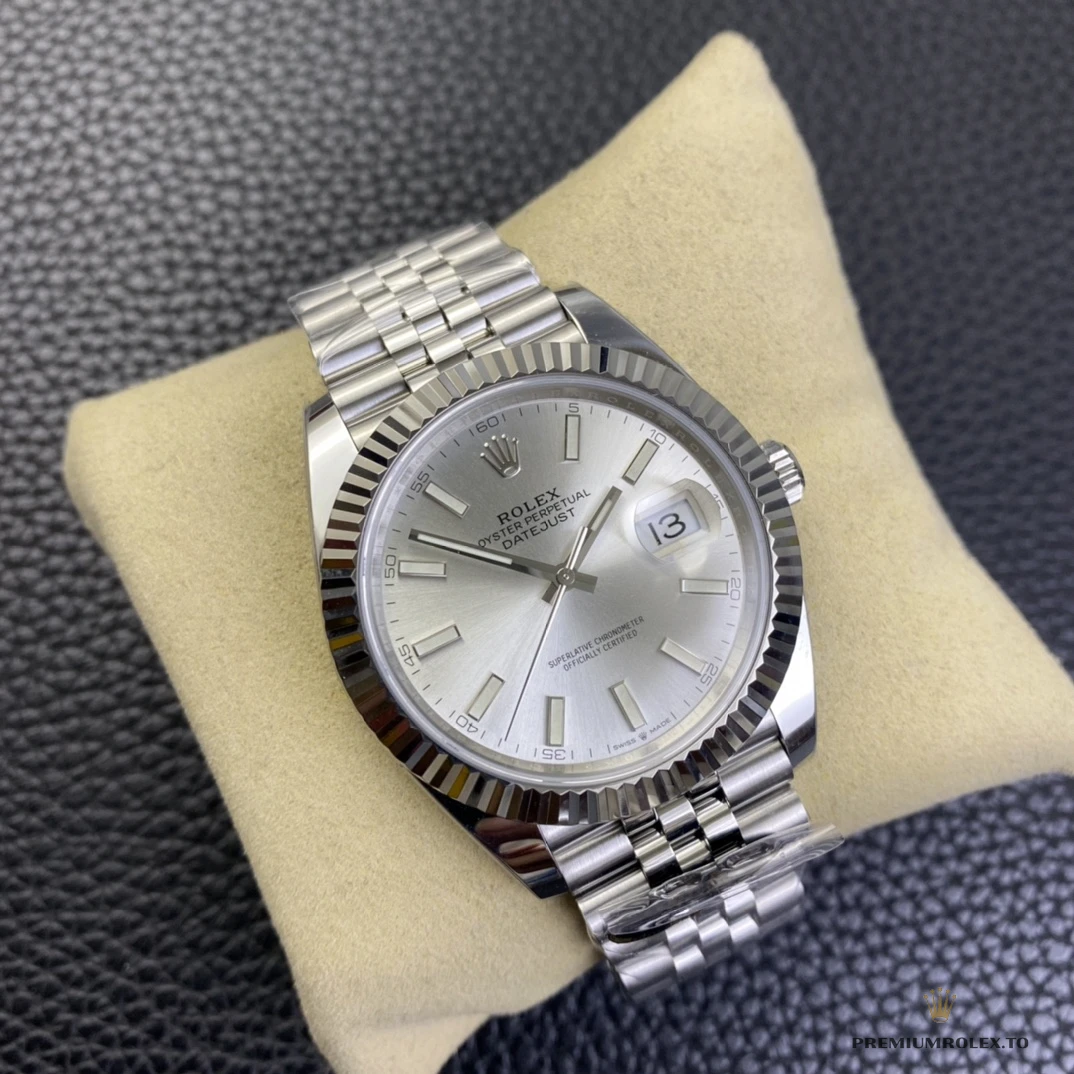
The short version of what follows: VS3235 runs longest, VR3235 feels closest in the hand, and the JH3235 is the newcomer that matched the VS on the one specification everybody quotes. None of the three is a bad movement. They are different compromises, and which compromise suits you depends on how you wear a watch rather than on a league table.
What JH3235 stands for
JH is Jinghe, a movement manufacturer based in Shanghai. The 3235 part is simply the Rolex reference the movement is built to follow. Put together, JH3235 means a 3235-architecture automatic made by Jinghe rather than by one of the two established suppliers. You will see it written as JH 3235, Jinghe 3235 and occasionally as the Asian Jinghe 3235 in listings and forum threads. They all mean the same thing.
The naming convention is worth ten seconds of your attention, because it confuses people. The letters identify who made the movement, not how good it is and not which revision you are looking at. VS is VS Factory’s own movement division. VR comes out of Dandong in the northeast. SH turns up on the day-and-date platform. You will also see DD and a few other prefixes on dealer sheets. A prefix by itself tells you the maker and nothing else, so a listing that says only “3235” is telling you less than it looks like it is.
Read it this way: letters = who built it. Digits = which Rolex movement it follows. Neither tells you the batch, which is why a timegrapher sheet in your own QC photos is worth more than any prefix.
Free sprung: what the balance actually does
This is the specification the JH3235 is known for, and most explanations of it are either one line or a textbook chapter. Here is the middle.
A mechanical watch keeps time because a balance wheel swings back and forth at a fixed rate. To adjust that rate you have two options. The common one is a regulator: a small lever with a pin that pinches the hairspring and shortens or lengthens its working length. Slide the lever, change the rate. Simple, inexpensive to make, and effective.
The other option is a free sprung balance. There is no lever and nothing touching the hairspring along its length. Instead the balance wheel itself carries four tiny adjustable weights on its rim, and a watchmaker changes the rate by turning those weights in or out to alter the wheel’s moment of inertia. Rolex regulates its own movements this way.
Two consequences follow, and they are the reason the specification matters:
Stability. A regulator lever is a small part held by friction against a spring that flexes eight times every second. It can creep, and a knock can shift it. Nothing on a free sprung balance can creep, because nothing is held by friction against the hairspring. Once it is set, the rate stays where it was put.
Breathing room. Without a pin restricting it, the hairspring expands and contracts symmetrically through the whole swing. That symmetry is what keeps the rate consistent between positions, so the watch behaves roughly the same on your wrist, face up on a table and crown down overnight.
The trade-off is service. Adjusting weights on a balance rim is slower and needs a steadier hand than sliding a lever, so a watchmaker who has only ever worked on regulated movements will take longer and charge accordingly. That is the practical cost of the specification, and it is worth knowing before you go looking for a free sprung movement on principle.
Where the JH3235 still trails the original
Jinghe matched the balance architecture and the position of the pallet stone, which is a detail the older platforms approximated. What it did not match is the hairspring’s terminal curve.
Rolex uses an overcoil, where the outermost turn of the hairspring is bent up and inward so that it breathes concentrically around the collet. The JH3235 uses a flat spring. Cosmetically this is irrelevant, because a Submariner has a solid caseback and nobody sees the movement anyway. Functionally it shows up as isochronism, which is the movement’s ability to hold the same rate at high and low wind. A flat spring tends to drift a little as the mainspring unwinds towards the end of its run, so the last stretch of the reserve gains slightly more than the first stretch.
Does it matter to you? If you wear one watch daily and wind it every morning, no. You live permanently in the first half of the reserve, where the drift is not there. If you rotate three watches and pull one out on the last legs of its run, you will see a few extra seconds and it will annoy you. That is the whole of the practical difference.
JH3235 against VS3235
These two are the free sprung pair, which makes them the natural comparison. On paper they are close, and the differences are in maturity rather than design.
VS3235 has the longer runtime and the overcoil, and it has been in the market long enough that its failure modes are known. When something goes wrong on a VS platform, somebody on a forum has already had it go wrong and written down the fix. It also takes Rolex 3235 parts more readily than anything else in the family, which matters over a decade of ownership rather than in the first year.
JH3235 has the newer finishing, the corrected pallet stone geometry, and a reported production cost below the VS. That last point is the one to watch, because it is what pushes the specification down into watches that previously shipped with a regulated movement. What it does not have yet is a long track record. First-generation movements from any maker have teething issues that get quietly fixed in the second and third batches, and there is no substitute for time in service.
Our position, stated plainly: if you want the safest bet today, the VS platform has the history. If you are the kind of buyer who likes being early and you keep your watches in rotation rather than in daily punishment, the Jinghe is interesting. Runtime figures for all three sit in the movement comparison table, where they are easier to read side by side than in a paragraph.
JH3235 against VR3235
This is the more useful comparison for most buyers, because the VR is the movement you meet most often.
The VR’s advantage is unglamorous and real. It is everywhere, so parts are everywhere, and any watchmaker who has serviced aftermarket Rolex movements has serviced one. Its weakness is the regulator lever and the shorter run between winds. If you strap the same watch on every morning, neither weakness will ever reach you.
The 3235 family against the original 3235
Take the caseback off and put the two side by side. What a watchmaker with a loupe looks at, in order:
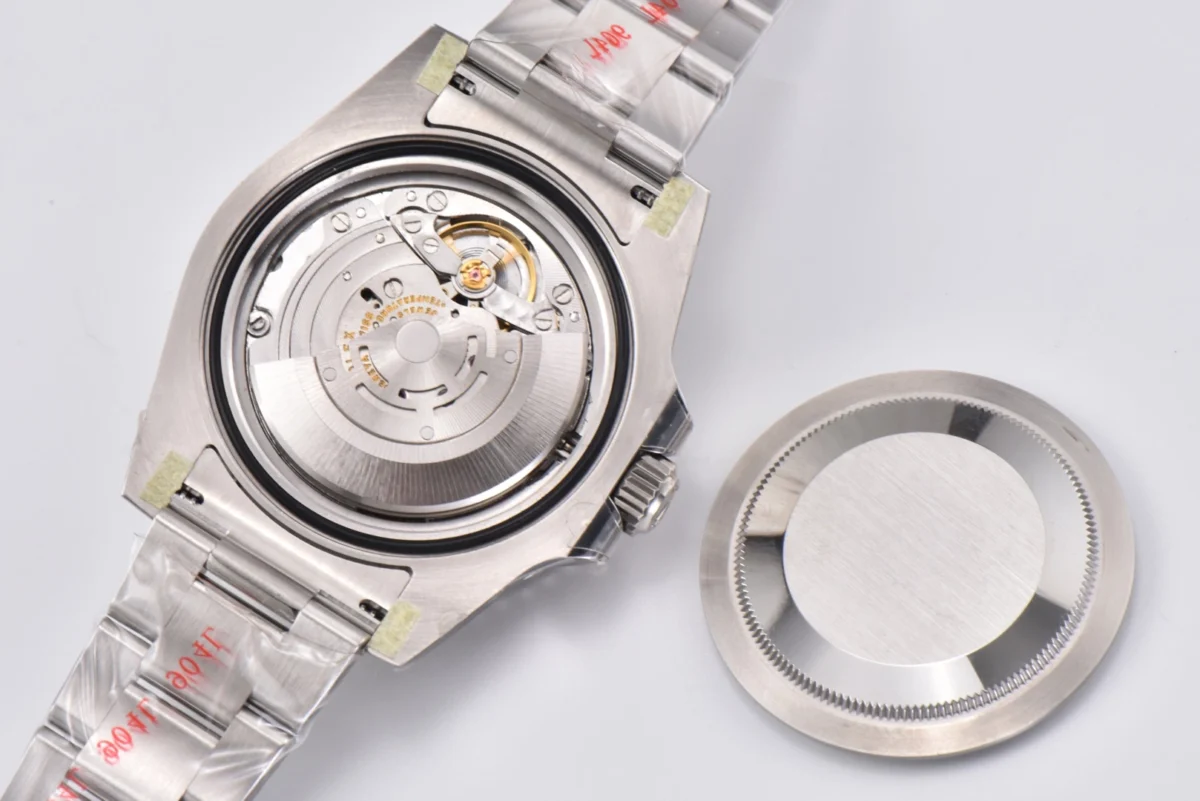
The escapement. Rolex’s own design uses a wheel with an unusual tooth geometry and a skeletonised pallet fork, both engineered to reduce contact losses. The aftermarket versions follow the layout and the dimensions, and the finish of the working surfaces is the first place a trained eye goes.
The terminal curve. Overcoil against flat, as above. This is the fastest tell and needs no measurement, just a look at the outer turn of the spring.
Surface finishing. Edge preparation on the bridges, the crispness of the countersinks, the consistency of the plating. The gap here is narrower than it was and it has not closed.
The rate over a week. A bench reading tells you the state of the movement in the minute you took it. A week on the wrist tells you what it does across positions, temperatures and wind states. That is the number worth having.
To be clear about what we sell: these are replicas built to follow the original’s design, and nothing in the movement makes one into a Rolex product. What the architecture buys you is behaviour, not provenance. If you want the full list of differences that survive close inspection, our what a jeweller notices piece walks through them.
Which watches carry a 3235-type movement
The architecture follows the references Rolex fitted the 3235 to, which means the sports and classic three-hand-plus-date models rather than the complicated ones. In our catalogue that is:
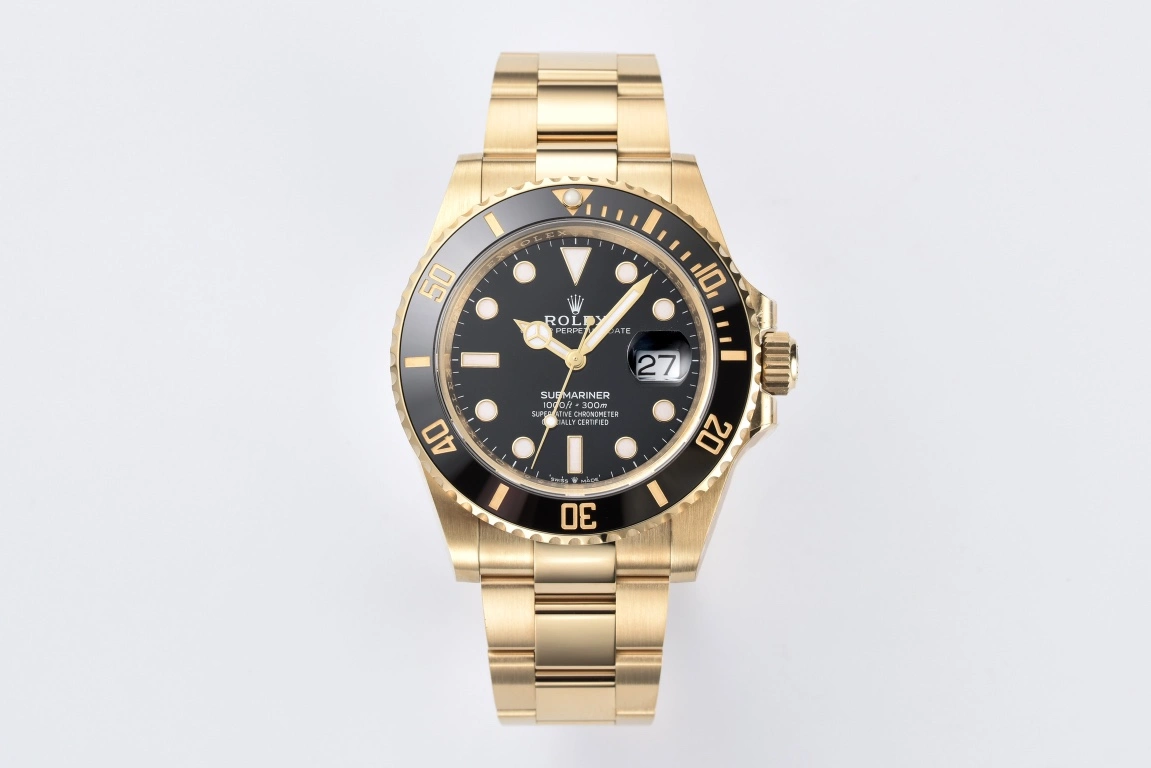
The Submariner collection, where the current 41mm references are the natural home for it, including the no-date 124060 if you want the version with nothing to scrutinise on the dial. The Datejust collection, which is the largest group of 3235-era references we stock at 81 listings. And the Oyster Perpetual range for the plainest possible execution.
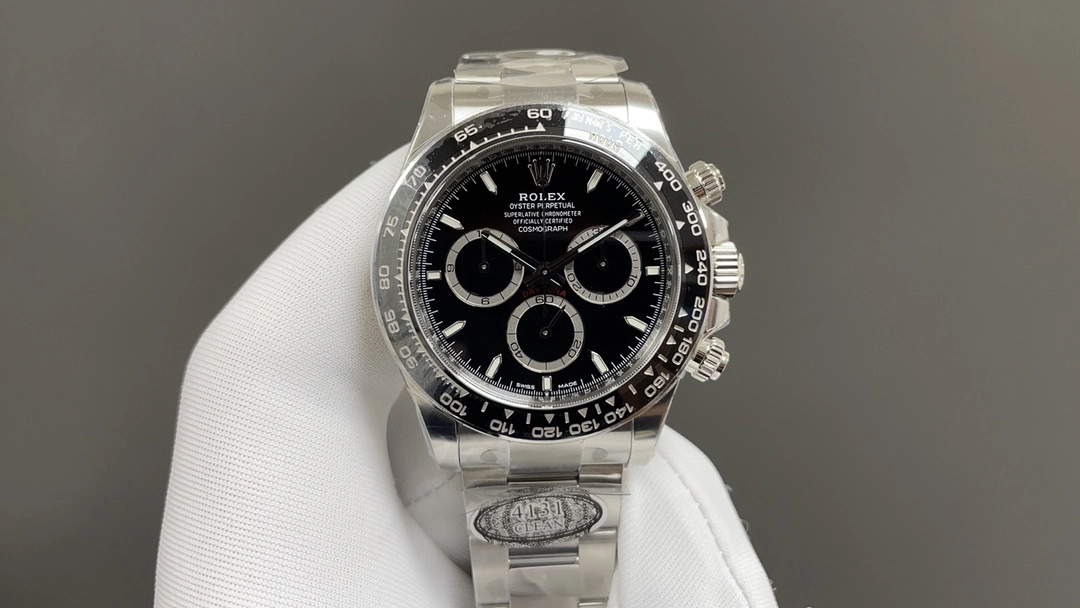
A Daytona is a different problem entirely, because a working chronograph needs a column wheel and three functioning subdials rather than a date. The Day-Date needs an instant day change at midnight on top of the date. Those platforms have their own labels, and the movement guide covers them properly. Do not expect a 3235 discussion to transfer.
Reading your own timegrapher sheet
If you ask for a timegrapher reading with your QC photos, you get three numbers and most people only look at the first. All three are worth a glance.
Rate. Seconds gained or lost per day. On the Swiss option expect roughly five to eight seconds a day in normal wear. Anything inside that band is fine and anything wildly outside it is a reason to ask for another unit before it ships, not after.
Amplitude. How far the balance swings, in degrees. A healthy fully wound movement sits in the high 200s. Low amplitude with a good rate usually means the oil has gone or the mainspring is tired, and it is the number that predicts a problem before the rate does.
Beat error. How unevenly the two halves of the swing are split, in milliseconds. Small is better. A large beat error is a quick fix on a free sprung balance and a slightly fiddlier one on a regulated movement, but either way it is fixable rather than fatal.
Two sanity checks while you have the photos open. The seconds hand should sweep evenly rather than stutter at a particular point on the dial, and on a 28,800 vph movement the sweep should look continuous to the naked eye. On the Japanese option at 21,600 vph you can count the steps if you look hard, which is normal and not a fault.
What we actually sell, and what we will not claim
On nearly every listing you choose between two movement options on the product page. The Swiss option follows the original architecture: about 70 hours of power reserve on the 3235 type, 28,800 vph, hacking seconds and a quickset date. The Japanese option is a Miyota-based automatic, about 40 hours, 21,600 vph, quickset date on date models, and serviceable by any watchmaker anywhere. The case and the crystal do not change between them. Around twenty listings come at a single price with no movement choice.
What we will not do is print a specific movement label against a listing. Batches rotate, and a page that said JH3235 in February would be wrong by autumn. If the exact platform in a specific watch matters to your decision, ask in the chat with the listing open and the team checks the current batch. It is a slower answer than a spec line and it is the one that stays true.
Questions about the 3235 family
Is the JH3235 better than the VS3235?
Not yet, on the evidence available. It matched the free sprung balance and corrected one geometry detail, and it still runs a flat hairspring and has a short service history. The VS keeps the longer runtime, the overcoil and the deeper parts supply. Where the Jinghe wins is on what it should cost to put a free sprung balance into a watch, and that is a bigger deal for the market than for any one buyer.
What does free sprung mean in one sentence?
No regulator lever touching the hairspring, with rate adjusted by moving weights on the balance wheel instead, which is how Rolex regulates its own movements and why the setting holds.
Will a normal watchmaker service a JH3235?
Most will. The layout follows the 3235, so the strip-down is familiar. Two things to ask before you hand it over: whether they have worked on a free sprung balance, and whether they can source parts for the platform if something inside needs replacing rather than cleaning. On a newer platform the second question is the one that bites.
Does VR3235 or VS3235 come in the watches you sell?
Both platforms circulate in the flagship tier and the specific one in a specific watch depends on the batch. That is why the product page names the movement option, Japanese or Swiss, rather than a three-letter supplier code. Ask us about a listing and we check it for you.
Does the 3235 type need a winder?
No, and that is largely the point of the long runtime. Take it off Friday night and it is still running Monday morning on the Swiss option. If it has stopped after a longer rest, turn the crown about twenty times before setting it rather than shaking it.
How often should it be serviced?
Every three to four years, and keep it away from magnets and hard knocks in between. A magnetised balance is the single most common reason a healthy movement suddenly starts gaining minutes, and it is a five-minute fix on a demagnetiser.
What to do with all this
Pick the watch first and the movement second, in that order. The reference decides how the piece looks on your wrist every day; the platform inside decides how often you reset it and who can open it in four years. If you rotate watches, take the Swiss option for the runtime. If you wear one watch daily and value being able to walk into any workshop, the Japanese option is not a compromise, it is a different set of priorities.
From here, the Submariner build comparison is the best next read if the Sub is your target, and the Datejust guide if you are leaning classic.
 WhatsApp Support