Catalog
Blog
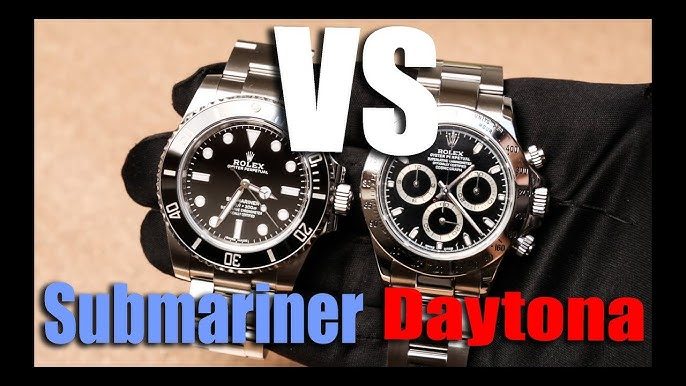
Submariner vs Daytona — Which Rolex Replica Should You Buy First?
Submariner vs Daytona — Which Rolex Replica Should You Buy First?
The submariner vs daytona question is the fork in the road for every new collector. Two iconic references, two different philosophies, two different movements. One is the most versatile watch ever made. The other is the most desired chronograph in the world. I have owned both for years — the Sub stays on my wrist, the Daytona lives in the box more than I expected. Here is an honest comparison with numbers, not hype.
You already decided on Rolex. Smart. Now you need to answer the real question: which rolex to buy first? This is not about which watch is “better” — both are exceptional. It is about which one makes sense as your first (and possibly only) piece. This decision affects your daily comfort, your movement maintenance, and how often you actually wear the watch. Most people agonize over this for weeks. By the end of this article, you will know which one belongs on your wrist.
In This Article
- Versatility — Where the Submariner Pulls Away
- Movement — VS3235 vs SA4130: Simplicity Against Complexity
- On the Wrist — Thickness, Weight, and Daily Wear Comfort
- Replica Accuracy — 95% vs 90%: Why the Sub Is Closer to Gen
- Lifestyle Match — Diver Mentality vs Collector Mentality
- The Two-Watch Strategy — Sub First, Daytona Second
- FAQ — Submariner vs Daytona Questions
- The Verdict — Start with the Sub
Versatility — Where the Submariner Pulls Away
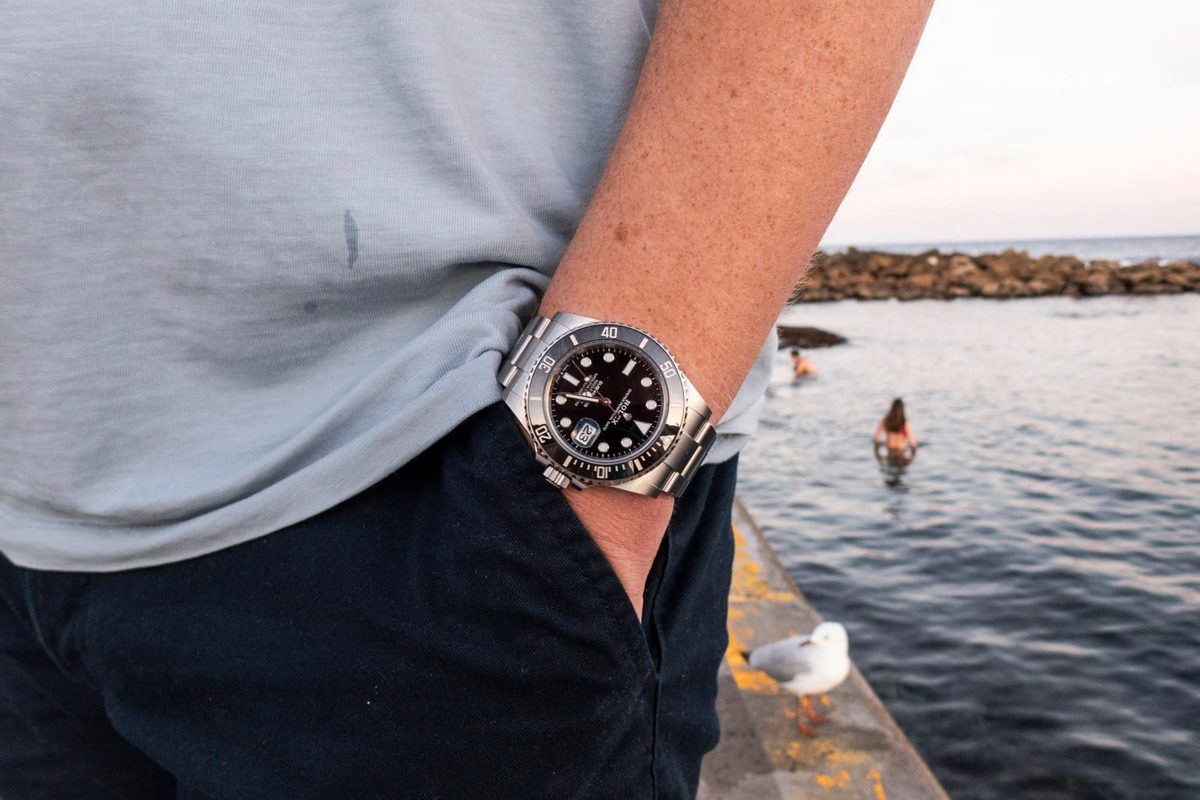
The Submariner is a 10/10 versatility watch. Board meeting with a suit — it works, sitting under the cuff with just the bezel edge visible. Beach vacation in swim trunks — it works, designed for water. Saturday brunch in a polo — it works, casual but intentional. Weekend construction project — it works, steel case rated to 300m. There is no situation where the Submariner looks out of place. That is not marketing — it is the result of a design that balances sport and dress in a way no other watch achieves.
The Daytona is a 7/10. Stunning in casual and business casual settings. Excellent with a blazer and jeans. But the chronograph pushers on either side of the crown create a wider profile that makes it slightly less formal under a dress shirt cuff. The pushers catch on the cuff edge, and you feel it — a small tug every time you extend your arm. This is not a dealbreaker, but it is a daily annoyance if you wear suits five days a week. The Submariner’s clean crown-guard silhouette slides under any cuff without friction.
Reality Check: If this is your only watch — the one piece for everything — the Submariner wins the versatility argument by a comfortable margin. If you already own a dress watch or a clean daily driver, the Daytona becomes more viable as a second piece.
Movement — VS3235 vs SA4130: Simplicity Against Complexity
The Submariner runs a three-hand time-and-date movement. The Daytona runs a chronograph with three subdials, a column wheel, and two pushers controlling start/stop/reset functions. This difference in mechanical complexity matters more than most buyers realize.
The VS3235 vs SA4130 comparison is not about which caliber is “better” — both are excellent clones. It is about long-term ownership reality. A three-hand movement has fewer components that can fail. When it does need service, any clone-specialist watchmaker handles it. The SA4130 requires a chronograph specialist — a smaller pool of watchmakers with higher fees and longer turnaround. Parts for the Submariner’s movement are abundant. Parts for the Daytona’s chrono module are tighter. Over five years of ownership, the Sub is cheaper and easier to maintain.
On the Wrist — Thickness, Weight, and Daily Wear Comfort
Numbers first. The Submariner 126610 measures 41mm diameter, 13.2mm thick, and weighs approximately 155g on the Oyster bracelet. The Daytona 116500 measures 40mm diameter, 12.2mm thick (thinner), and weighs approximately 140g (lighter). On paper, the Daytona sounds more comfortable. In practice, the story flips.
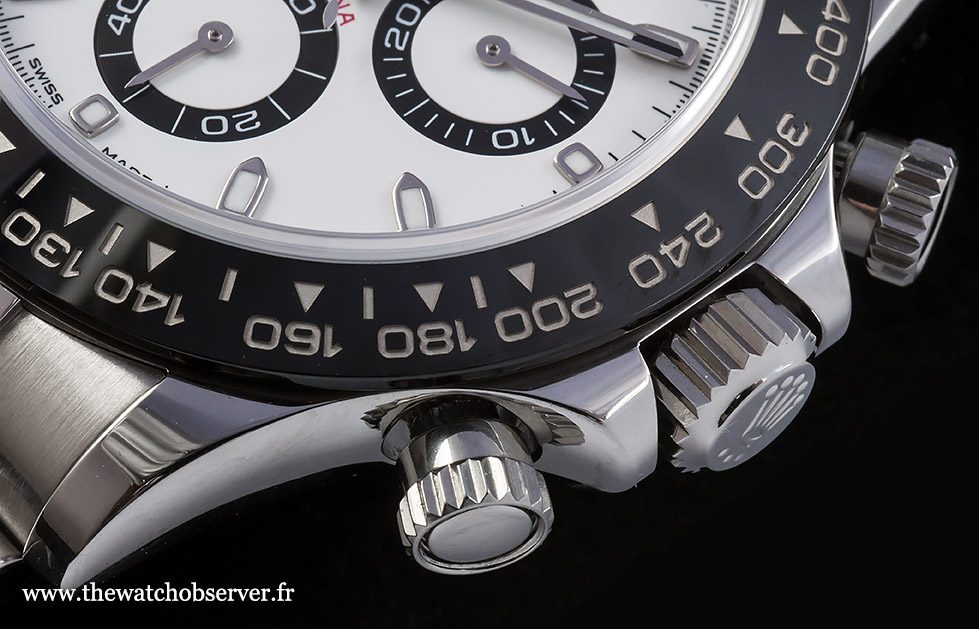
The pusher problem. The Daytona’s chronograph pushers at 2 and 4 o’clock extend the case profile beyond the 40mm diameter. When you measure lug-to-lug including pushers, the Daytona occupies more wrist space than the Submariner despite the smaller dial. The pushers also create pressure points if you rest your wrist on a desk edge — something office workers notice within the first week. The Sub’s crown guards sit flush, creating a smooth profile from 12 to 6.
Weight distribution. The Submariner’s extra 15g comes from the slightly thicker case and the Oyster bracelet’s solid center links. This weight sits low on the wrist and distributes evenly — it feels planted rather than heavy. The Daytona is lighter but its weight concentrates at the case (the bracelet links are marginally thinner), which can create a top-heavy sensation on slimmer wrists. For daily wear comfort across an 8-hour workday, the Sub’s balanced weight wins despite being heavier on the scale. Our size guide covers wrist measurements for both models.
Thickness matters for cuffs. The Submariner at 13.2mm is thicker than the Daytona at 12.2mm. That millimeter difference is real — the Sub sits slightly higher above the wrist. But the Sub’s smooth bezel edge tapers the visual height, while the Daytona’s flat ceramic bezel makes it look thicker than it measures. Both fit under most dress shirt cuffs, but the Sub requires a slightly looser cuff to avoid bezel contact.
Replica Accuracy — 95% vs 90%: Why the Sub Is Closer to Gen
The accuracy gap between these two icons exists because the Submariner is a simpler watch to replicate. Three-hand layout, one complication (date), rotating bezel. The critical components — ceramic bezel insert, dial printing, bracelet — are well-solved problems for flagship factories. A VSF or Clean Submariner achieves roughly 95% visual accuracy compared to genuine, with tells limited to expert-level inspection (laser crown on crystal, micro-differences in lume color under UV). For the full factory breakdown, see our VSF vs Clean Submariner comparison.
The Daytona sits around 90%. The chronograph adds difficulty: subdial alignment must be precise (three dials, six hands), pusher engagement feel varies between factories, and the tachymeter bezel engraving depth and filling consistency are harder to match. BTF and Clean V2 both produce excellent Daytonas, but the additional complication creates more potential tells. The subdial spacing, the “DAYTONA” text at 6 o’clock, the red chrono hand color — each is a variable that can drift slightly from genuine spec. Our BTF vs Clean Daytona breakdown covers these specifics.
Insight: The submariner or daytona replica decision partly depends on how much scrutiny your watch faces. If you work in finance or tech where watch culture is strong, the Sub’s tighter accuracy provides more confidence. If your social circle does not include watch enthusiasts, the Daytona’s slightly lower accuracy is irrelevant — both look unmistakably Rolex to the average eye.
Lifestyle Match — Diver Mentality vs Collector Mentality
The chronograph vs diver choice maps to how you think about watches. Diver mentality: the watch is a tool. You wear it, bang it around, take it to the beach, forget you are wearing it. The Submariner rewards this approach — it is built for daily abuse, the bezel rotates for timing, and the 300m water resistance means zero anxiety around water. You stop thinking about the watch on your wrist. That is the point.
Collector mentality: the watch is a statement. You chose it because it looks extraordinary, because the pushers and subdials signal mechanical sophistication, because the Daytona is the most recognized chronograph in history. You wear it when the outfit matches. You admire it at your desk. You rotate it with other pieces. The Daytona thrives in a collection because it offers something fundamentally different from a time-only piece — it has active complications you interact with (timing intervals, using the tachymeter).
Ask yourself two questions. First: will this be my only watch for the next 12 months? If yes → Submariner. The versatility gap is too wide for the Daytona to serve as a solo piece across all situations. Second: do I already own a clean three-hand watch? If yes → Daytona. Adding a chronograph to your collection creates maximum variety. The submariner vs daytona answer depends on your existing wardrobe of watches, not on which is “better.”
The Two-Watch Strategy — Sub First, Daytona Second
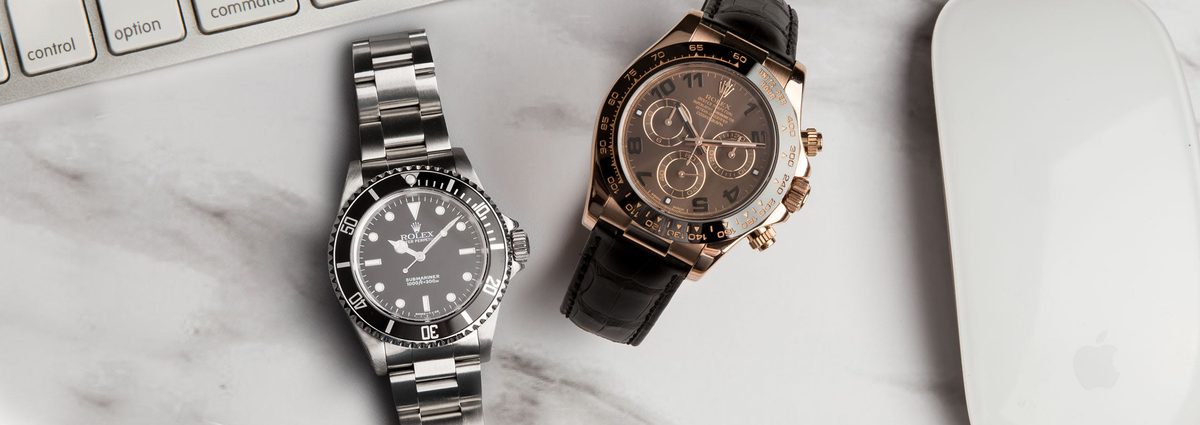
Eighty percent of collectors start with the Submariner. This is not groupthink — it is pattern recognition. The Sub teaches you what you want from a watch: how 41mm wears on your wrist, whether 155g is too heavy or perfect, whether you prefer Oyster or Jubilee, whether you value the bezel’s timing function or never use it. Six months of daily wear with the Sub gives you enough data to make an informed second purchase.
Then the Daytona enters as watch number two. Now the chronograph vs diver distinction works in your favor — two watches that serve different purposes, different aesthetics, different movements. Wear the Sub to the beach, the gym, the construction site. Wear the Daytona to dinner, events, weekends. This rotation pattern maximizes the value of both pieces while keeping each in its optimal context.
The factory comparison guide helps you pick the right factory for each: VSF or Clean for the Sub, BTF or Clean V2 for the Daytona. Buying from the best factory for each specific model means both pieces perform at their ceiling — and your two-watch collection covers every scenario.
FAQ — Submariner vs Daytona Questions
Q: Which rolex should I buy first if I wear suits daily?
Submariner. The clean profile without protruding pushers slides under dress shirt cuffs without catching. The Oyster bracelet transitions seamlessly from suit to weekend. The Daytona works with suits too — it just requires a slightly wider cuff and creates more visual presence, which may be too casual for conservative corporate environments.
Q: Is the Daytona worth the extra maintenance?
If you actually use the chronograph — timing laps, cooking, presentations — yes. The tactile satisfaction of pressing those pushers and watching the chrono hand sweep is genuinely enjoyable. If you never plan to use the chronograph function and just want the aesthetic, factor in the higher service cost as part of ownership. The SA4130 is reliable, but servicing a chronograph costs more than servicing a three-hand movement.
Q: Can I swim with the Daytona?
Technically yes — genuine Daytona is rated to 100m. But the screw-down pushers must be fully secured before water exposure, and the chronograph should never be operated underwater. The Submariner at 300m with a unidirectional bezel is designed for water from the ground up. For pool and beach use, the Sub is the stress-free choice. The Daytona is water-resistant, not a swim watch.
Q: Which holds its value better in the community?
The Submariner is the most liquid piece on the secondary market — it sells fastest and retains the most value relative to purchase cost. The Daytona is second. Both are excellent holds compared to less popular references. If you think of your rep collection as a liquid asset, the Sub is the safer first purchase — you can sell it quickly if your preferences change.
Q: What about the Submariner vs Daytona for smaller wrists?
Below 17cm wrist circumference, the Daytona’s 40mm case (plus pushers) can feel wide. The Submariner at 41mm actually wears more compact because the case is a clean circle without protrusions. Counter-intuitive but true: the nominally larger Sub often fits smaller wrists better than the nominally smaller Daytona. Try both on if possible — wrist shape matters as much as circumference.
The Verdict — Start with the Sub
The submariner vs daytona debate has a clear answer for first-time buyers: the Submariner. Not because it is a better watch — they are both exceptional — but because it is the more practical first purchase. Higher versatility, simpler movement, easier service, tighter accuracy relative to genuine, better all-day comfort on the wrist. The Sub is the foundation.
The Daytona is the aspiration — add it when you are ready for a second piece. Six months with the Sub teaches you what matters to you on the wrist. Then the Daytona arrives as a deliberate addition that fills a different role, not a replacement that leaves you wondering if you chose wrong.
Browse our Submariner collection or our Daytona collection to see what is available. And when you are ready to pick a factory, the factory comparison has every model mapped.
 WhatsApp Support