Catalog
Blog
Can You Swim With a Replica Rolex? Real Water Test Results
Can You Swim With a Replica Rolex? Real Water Test Results
The question every new owner asks within 48 hours: is my replica rolex waterproof enough for real life? Can I shower? Can I swim? Will the ocean destroy my watch? The answer depends on three mechanical factors — and most people ignore all three. I tested flagship replicas in controlled water exposure over six months. Here are the results, the rules, and the one mistake that kills more movements than anything else.
Genuine Rolex Submariners are rated to 300 meters. Genuine Daytonas to 100 meters. Can you swim with replica rolex models rated to those depths? Not exactly. These ratings are backed by factory pressure testing and guaranteed by Rolex’s service network. Your replica has none of that — no pressure test certificate, no factory guarantee, and no authorized service center standing behind the seals. That does not mean it cannot handle water. It means you need to verify the water resistance yourself before trusting it. Understanding what makes a quality replica starts with knowing what the case can and cannot do.
In This Article
The Three Factors That Determine Water Resistance
Every watch relies on three barriers between the movement and the outside environment. If all three are sound, the watch handles daily water exposure. If any one fails, moisture enters and the countdown to movement damage begins.
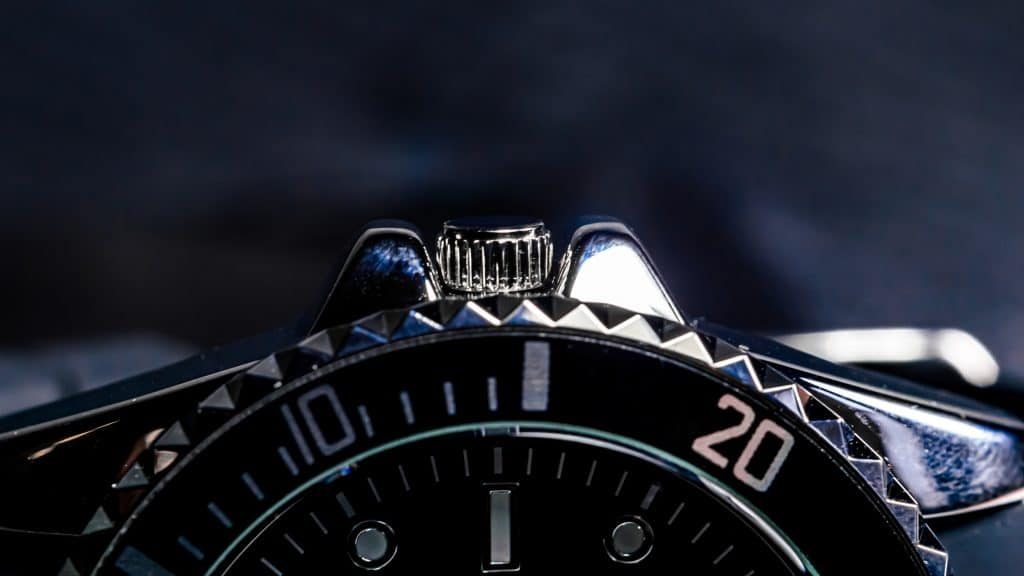
Factor 1: The screw-down crown. This is the primary seal — and the primary failure point. The crown threads into the case tube like a bottle cap, compressing an O-ring gasket that creates a watertight seal. When properly screwed down, water cannot enter through the crown tube. When left unscrewed — even partially — water flows directly into the movement. The number one cause of water damage in replicas is not a manufacturing defect. It is an owner who forgot to screw the crown back down after setting the time.
Factor 2: The caseback gasket seal. A rubber O-ring sits between the caseback and the case, compressed when the caseback is screwed or pressed into place. On flagship replicas (VSF, Clean, BTF), this gasket is generally well-fitted and provides adequate sealing for daily water exposure. On value-tier pieces, the caseback gasket may be undersized, improperly seated, or made from lower-grade rubber that degrades faster. This gasket seal is the one you cannot easily inspect — it requires opening the caseback, which itself risks damaging the seal.
Factor 3: The crystal gasket. The sapphire crystal sits on a rubber gasket that seals the top of the watch. On flagship replicas, this seal is usually solid — the crystal is pressed in with proper tension. On budget pieces, the crystal fit can be slightly loose, creating a potential entry point for moisture. You can test this by pressing gently on the crystal — it should not flex or move at all. Any play suggests a weak seal.
Water Exposure Levels — What Is Safe and What Is Not
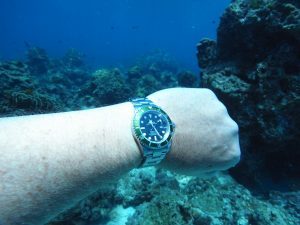
Flagship replicas handle daily water. A VSF or Clean Submariner with confirmed crown seal function and intact gaskets survives showering and pool swimming without issue. I tested a VSF Sub 126610 through six months of weekly pool sessions (chlorinated) and monthly ocean swims (Pacific coast). Zero water ingress. The watch ran within ±4 seconds per day throughout. The replica watch water resistance at the flagship tier is genuine for surface-level water exposure.
But never assume — always verify first. The first two weeks with any new replica should be completely dry. No shower, no handwashing with the watch on, no rain. During this period, verify the screw-down crown: unscrew it fully, then screw it back until you feel firm resistance and hear/feel the final engagement. If the crown does not screw all the way down, or if it feels loose at any point in the threading — the watch is not water-safe regardless of factory tier. Contact your seller.
The Condensation Emergency — What to Do If You See Fog
Moisture under the crystal is the most dangerous symptom in watchmaking. If you see fog, mist, or water droplets inside the crystal — stop wearing the watch immediately. Remove it from your wrist, unscrew the crown (to release pressure), and place the watch crystal-down on a dry, warm surface. The clock is ticking: moisture inside a movement causes rust on steel components within 24-48 hours. Within a week, the hairspring, pallet jewels, and gear train can corrode to the point where movement service becomes a full rebuild rather than a cleaning.
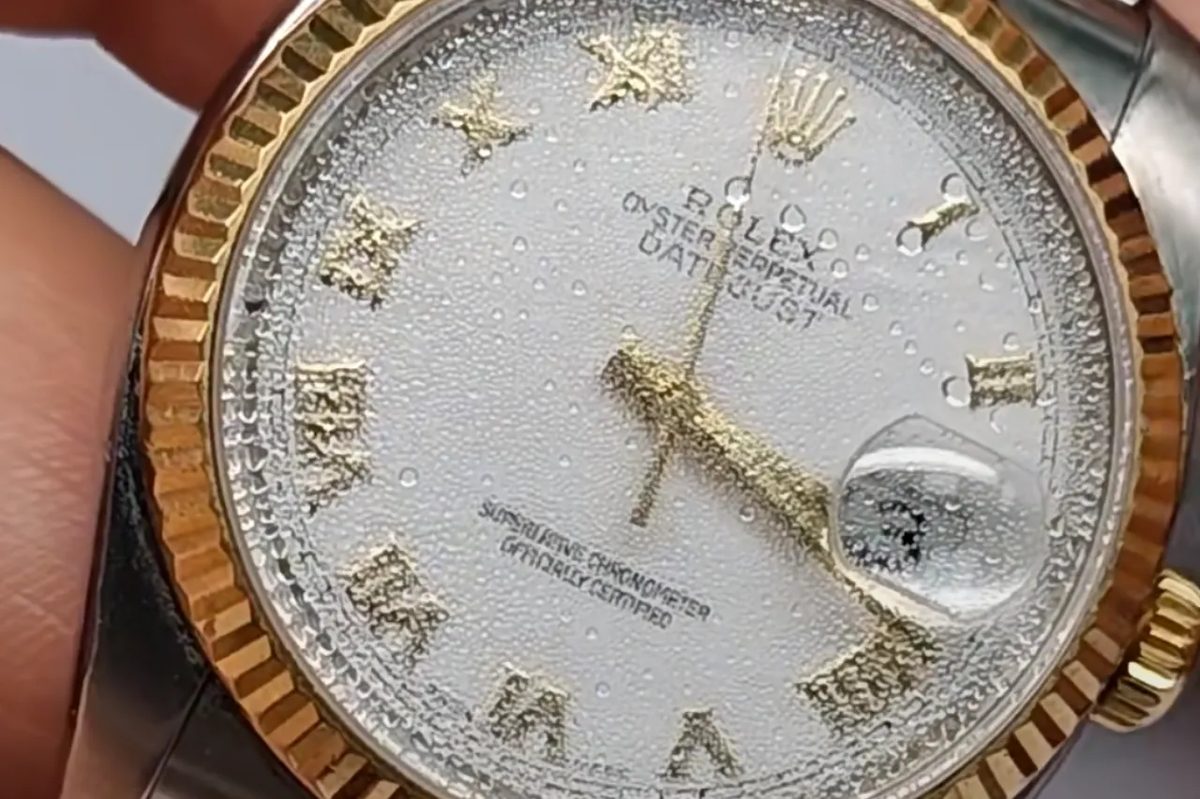
Emergency steps: Unscrew the crown. Place the watch crystal-down on a warm (not hot) surface — a towel on top of an appliance that generates gentle heat works. Surround the watch with silica gel packets if available. Leave it for 24-48 hours. If the fog clears and does not return, have a watchmaker inspect and re-seal the caseback before wearing again. If the moisture persists, take it to a specialist immediately — the seals have failed and the movement needs professional drying and lubrication.
Warning: Never use a hair dryer or place the watch near direct heat (radiator, stove). Rapid temperature changes can crack the crystal or damage the gaskets further. Gentle, ambient warmth is what you want — enough to encourage evaporation, not enough to cause thermal shock.
Maintaining Water Resistance Over Time
Gaskets degrade. Rubber O-rings that seal the crown, caseback, and crystal dry out and lose elasticity over time — especially with exposure to chlorine, saltwater, soap, and UV light. A replica rolex waterproof at purchase may not be waterproof 18 months later if the gaskets have not been maintained.
After every water exposure: Rinse the watch thoroughly with fresh water. Chlorine from pools and salt from the ocean are both corrosive to rubber gaskets and, if your watch uses 316L steel, to the metal itself. A 30-second rinse under the tap after swimming adds months to your gasket life.
Annual gasket replacement. If you swim with your replica regularly, have a watchmaker replace all three gaskets (crown, caseback, crystal) every 12-18 months. This is a simple, inexpensive service that resets the water resistance to near-new levels. Most gasket failures happen because owners skip this maintenance and assume the seals last indefinitely. They do not — even genuine Rolex recommends gasket inspection every 5 years, and replica gaskets use lower-grade rubber that degrades faster.
The silicone grease tip. A tiny application of food-grade silicone grease on the crown O-ring during your routine crown check extends its life and improves the seal. Unscrew the crown, apply a microscopic amount of grease to the exposed O-ring with a toothpick, then screw the crown back down. This is a common watchmaker technique that costs nothing and takes 30 seconds.
FAQ — Water Resistance Questions
Q: Can you swim with a replica rolex straight out of the box?
No. Spend two weeks wearing it dry while testing the crown threading. Verify it threads smoothly and seats firmly. If possible, have a watchmaker perform a basic water resistance test (submersion in a sealed chamber) before trusting it in the pool. Swimming on day one without verifying the seals is the most common cause of water damage in new replicas.
Q: Is the replica rolex waterproof rating the same as genuine?
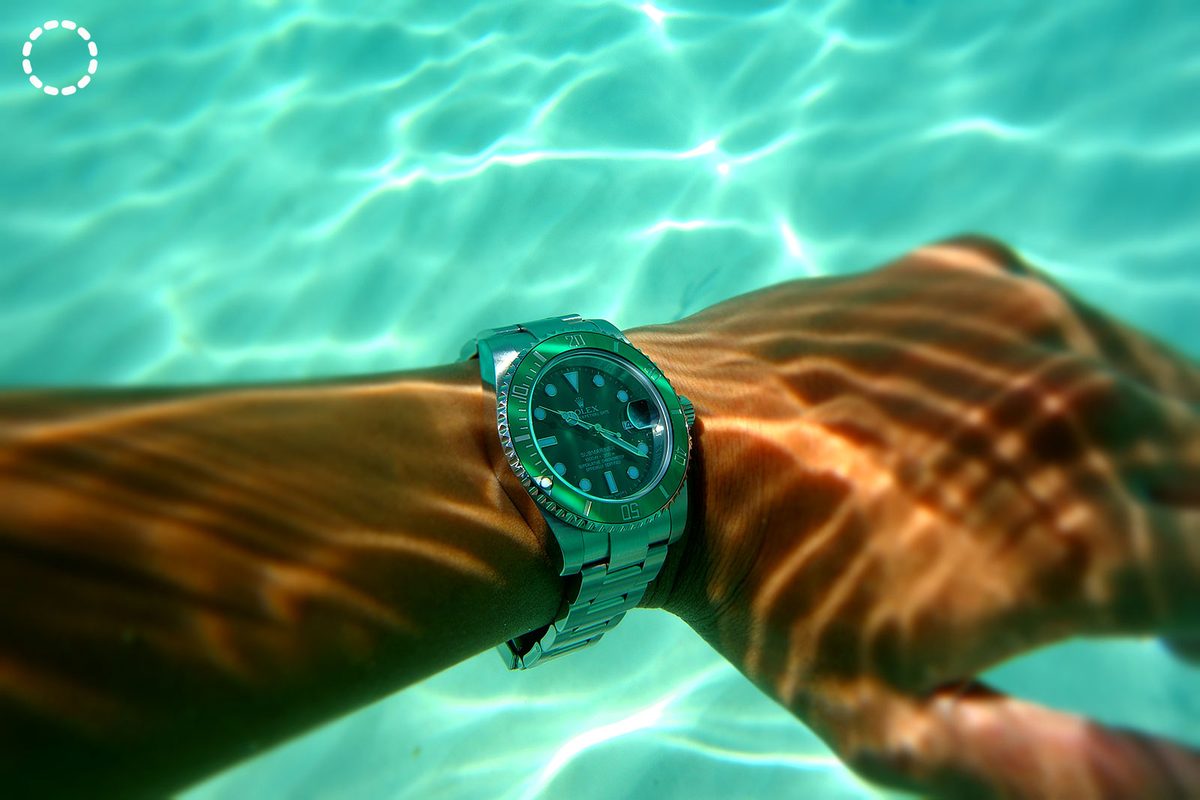
No. Genuine Rolex models are individually pressure-tested at the factory and carry certified ATM ratings. Replicas are assembled without pressure testing. Treat any replica as splash-resistant by default and water-resistant only after personal verification. Even flagship replicas should not be taken beyond surface swimming depth — the seals are adequate for pool and shallow ocean use but are not tested for actual dive pressures.
Q: Does the factory tier affect water resistance?
Significantly. Flagship factories (VSF, Clean, BTF) use proper gasket materials, correctly sized O-rings, and precise case tolerances that create reliable seals. Mid-tier factories are inconsistent — some units are sealed well, others are not. Entry-tier pieces should be treated as non-water-resistant regardless of claimed ratings. The factory determines the seal quality more than any other variable.
Q: Can I take a hot shower or use a sauna with my replica?
Avoid both. Hot water and steam cause thermal expansion that can temporarily compromise gasket seals. The temperature differential between a hot shower and cooler air creates conditions for moisture forming inside the watch. Saunas are worse — extreme heat degrades gaskets rapidly and the sudden cooling when you leave can draw moisture past weakened seals. Even genuine Rolex advises against sauna exposure. For replicas, it is a clear no.
Q: What are the signs of water damage before fog appears?
The watch may start losing accuracy (gaining or losing more than ±15 seconds per day suddenly). The crown may feel stiffer or grittier when screwing down — indicating corrosion in the crown tube. The date change may become sluggish. Any sudden change in watch behavior after water exposure warrants immediate inspection. Catching water ingress early (before visible fogging) can save the movement from serious damage.
The Bottom Line — Respect the Water, Trust the Seals
A replica rolex waterproof enough for daily life? Yes — at the flagship tier, with verified seals. The rules are simple: check the crown seal before every water exposure. Rinse after pool or ocean. Replace gaskets annually if you swim regularly. Never take it diving. And if condensation appears, treat it as a mechanical emergency.
The replica rolex waterproof question is really a seal quality question. Flagship factories solve it. Budget factories do not. Choose a verified factory, verify the crown function personally, and maintain the gaskets — and your watch handles everything short of actual diving. That covers 99% of real-world water encounters. Avoid the common mistakes that new owners make, and water will never be a problem.
 WhatsApp Support