
 Catalog



Replica Rolex Cosmograph Daytona Series Middle East Plate Ice Blue Di
In Stock
Price range: $249.00 through $1,249.00
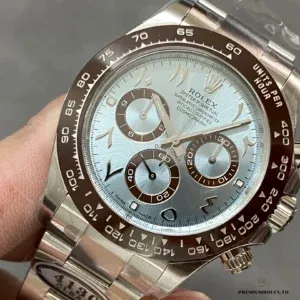
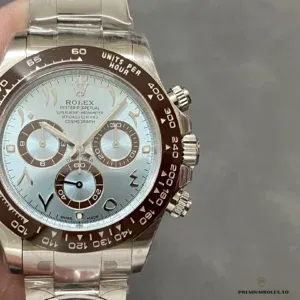
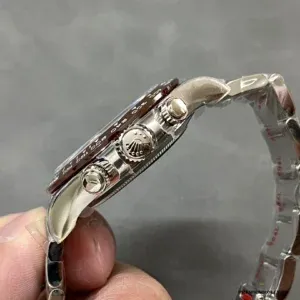
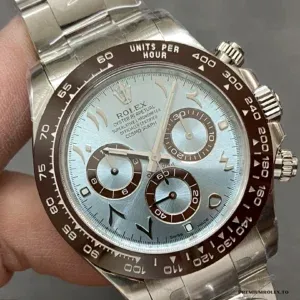
This replica Rolex Daytona 116506 pairs an ice blue dial with Eastern Arabic numerals instead of baton markers, and the three counters are ice blue inside brown rims. The 40 mm case and Oyster bracelet are 904L steel in a platinum tone, under a chestnut brown ceramic bezel with the tachymeter scale.
Free tracked shipping with DHL or FedEx · 8-12 photos and a video of your watch before it ships · 14 days to return
Optional extra
$99.00
Eastern Arabic numerals on ice blue
The hour positions on this 116506 carry Eastern Arabic digits, the script used on dials made for the Gulf region, so 5 reads as ٥ and 7 as ٧. Everything else follows the platinum-tone 116506: a pale ice blue face, counters in the same blue with brown outer rims, and a brown bezel that picks up the rim colour. If you prefer stones to numerals, the ice blue 116506 with baguette markers keeps the same dial and bezel colours, while the ice blue 116506 with Arabic numerals is a near twin with the digits printed in black.
116506 ice blue dial at a glance
| Reference | 116506 (Eastern Arabic numerals) |
| Case | 40 mm, 904L steel in a platinum tone |
| Bezel | Chestnut brown ceramic, tachymeter |
| Dial | Ice blue, Eastern Arabic numerals |
| Counters | Ice blue, brown rims |
| Bracelet | Oyster, platinum-tone steel |
Platinum tone over 904L steel
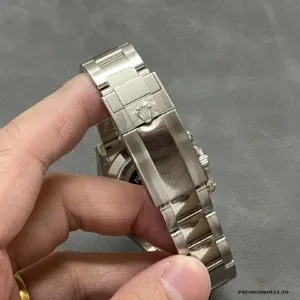
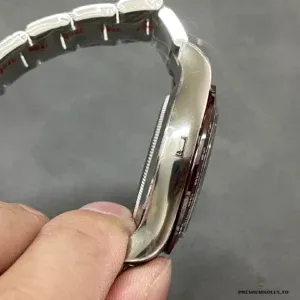
The case and bracelet are 904L steel finished in a platinum tone, steel all the way through. The brown bezel is ceramic and the crystal is sapphire with an anti-reflective coating. On the wrist shots the steel and the ice blue dial read cooler than the yellow and rose gold-tone Daytonas in our Rolex Daytona replica range.
Chronograph and movement choice
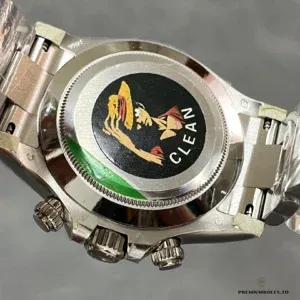
The chronograph starts, stops and resets with either movement. Japanese is a Miyota-based automatic chronograph at 21,600 vph with roughly 40 hours of reserve; Swiss follows the 4130 chronograph and beats at 28,800 vph. It is rated to 30 m: rain and hand washing are fine, the pool and shower are not. Builds from different workshops are compared in our BTF vs Clean Daytona piece.
Can I read the Eastern Arabic numerals easily?
The digits sit where the hour markers would be, so you read the time by position even if the script is new to you: the top position is 12 and the right-hand position is 3. Photos 04 and 08 show the numerals up close.
Only logged in customers who have purchased this product may leave a review.
Related products

Oyster Perpetual
Price range: $299.00 through $999.00

Price range: $249.00 through $1,249.00

Yacht-Master
Price range: $299.00 through $999.00
Price range: $249.00 through $849.00

Price range: $249.00 through $1,249.00
Price range: $299.00 through $999.00
Yacht-Master
Price range: $299.00 through $999.00

Price range: $299.00 through $999.00


 WhatsApp Support


Reviews
There are no reviews yet.